

Introduction:
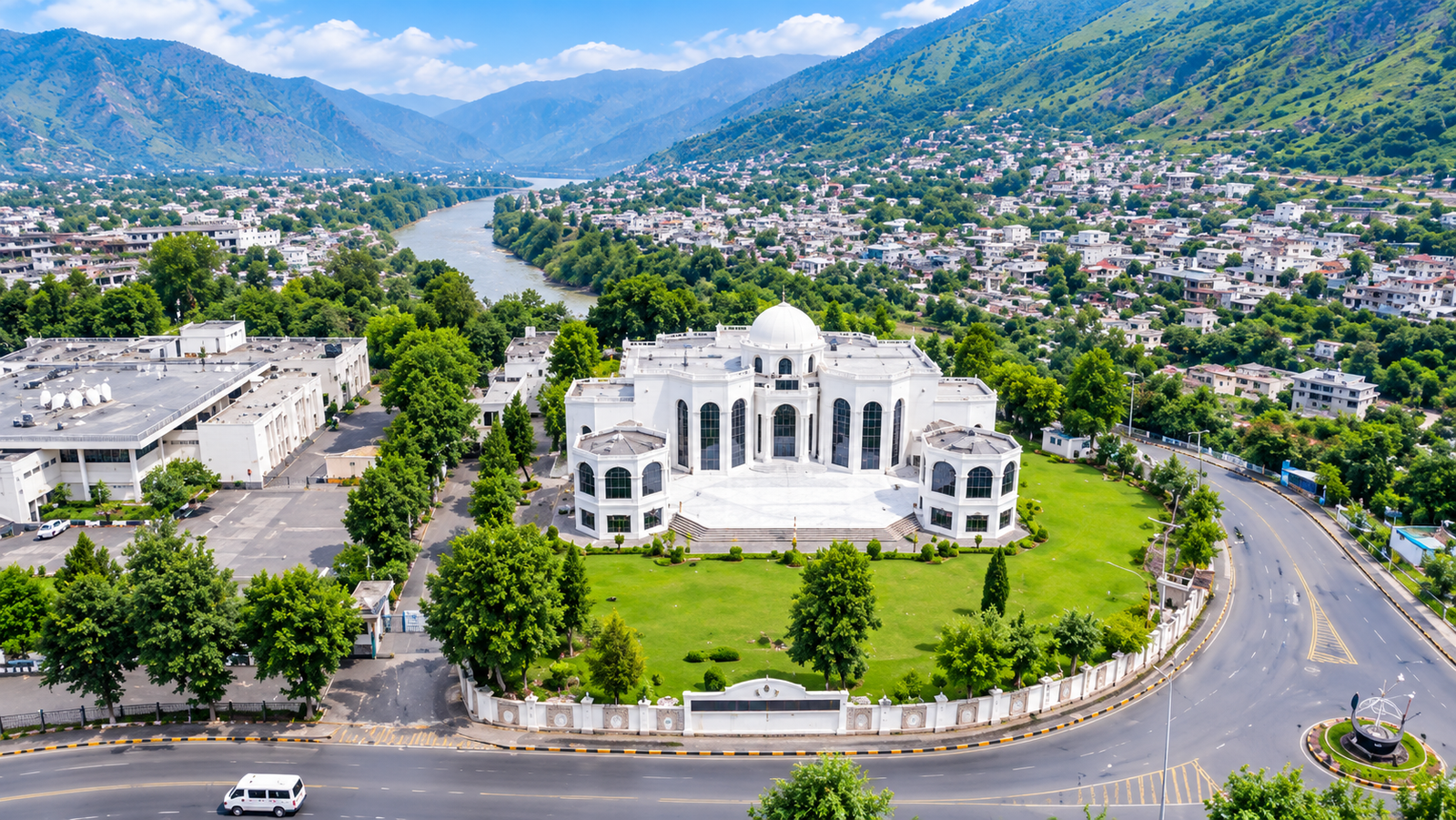
Muzaffarabad is located at the confluence of two rivers, the Neelum River and the Jhelum River, at an elevation of approximately 2,300 feet above sea level. It has a population of about 400,000 people, with an additional floating population due to tourism and administrative activities.
1938 – The Town Committee: The first formal local body, the Muzaffarabad Town Committee, was established to manage basic civil amenities, sanitation, and street lighting.
In 1960, when Muzaffarabad was granted the status of a Municipal Committee, the population increased to about 40,000 people, and the city expanded to 10 wards.
In 1990, when the population reached 70,000, Muzaffarabad was upgraded to a Municipal Corporation, consisting of 20 wards. The total area under the Municipal Corporation of Muzaffarabad is approximately 36 square kilometers.
Muzaffarabad suffered extensive damage during the 2005 earthquake, resulting in significant loss of life and infrastructure. The disaster emphasized the need for effective urban management and resilient municipal systems.
The Municipal Corporation played a key role in emergency response and recovery, including debris clearance, restoration of essential services, sanitation management, and coordination with relief agencies. It also supported rehabilitation and reconstruction efforts.
The Corporation remains committed to strengthening disaster management and developing a resilient, sustainable, and well-managed city.
Within the limits of the Municipal Corporation Muzaffarabad, there are about 25,145 houses, 11,005 shops, 350 hotels, 65 private clinics, 9 hospitals, including 6 major hospitals. There is also 1 fish and meat market and 1 fruit and vegetable market.